Skip to content
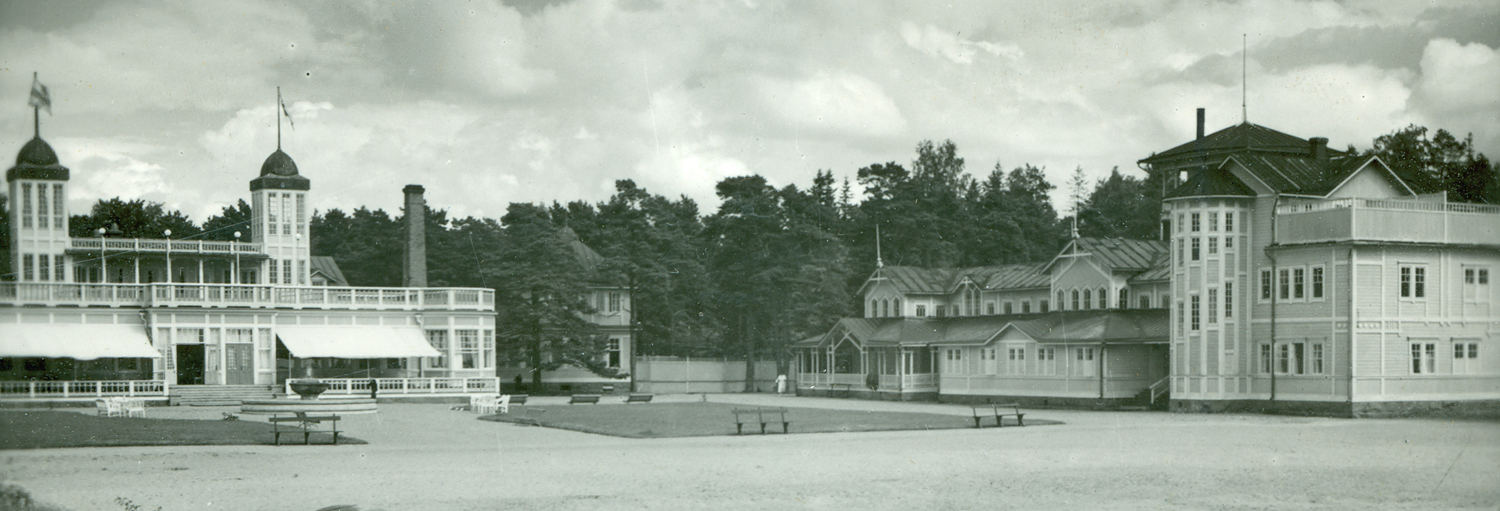
Seurahuone ja kylpylä 1900-luvun alussa. Societetshuset och Hangö bad i början på 1900-talet. The restaurant building and the spa buildling in the early 1900s.

History of Hanko

1910
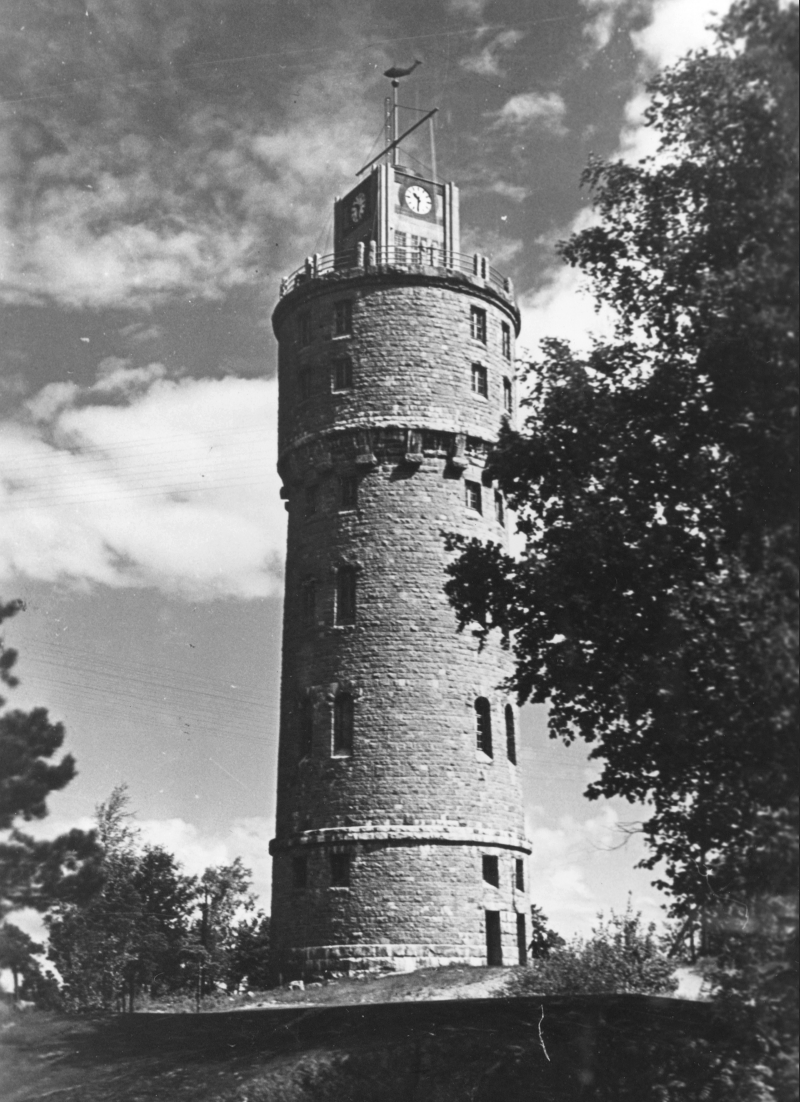
Hangon vanha vesitorni. Hangös gamla vattentorn. The old water tower of Hanko.
Finland’s first water tower is built in Hanko.
The 1st of August 1914
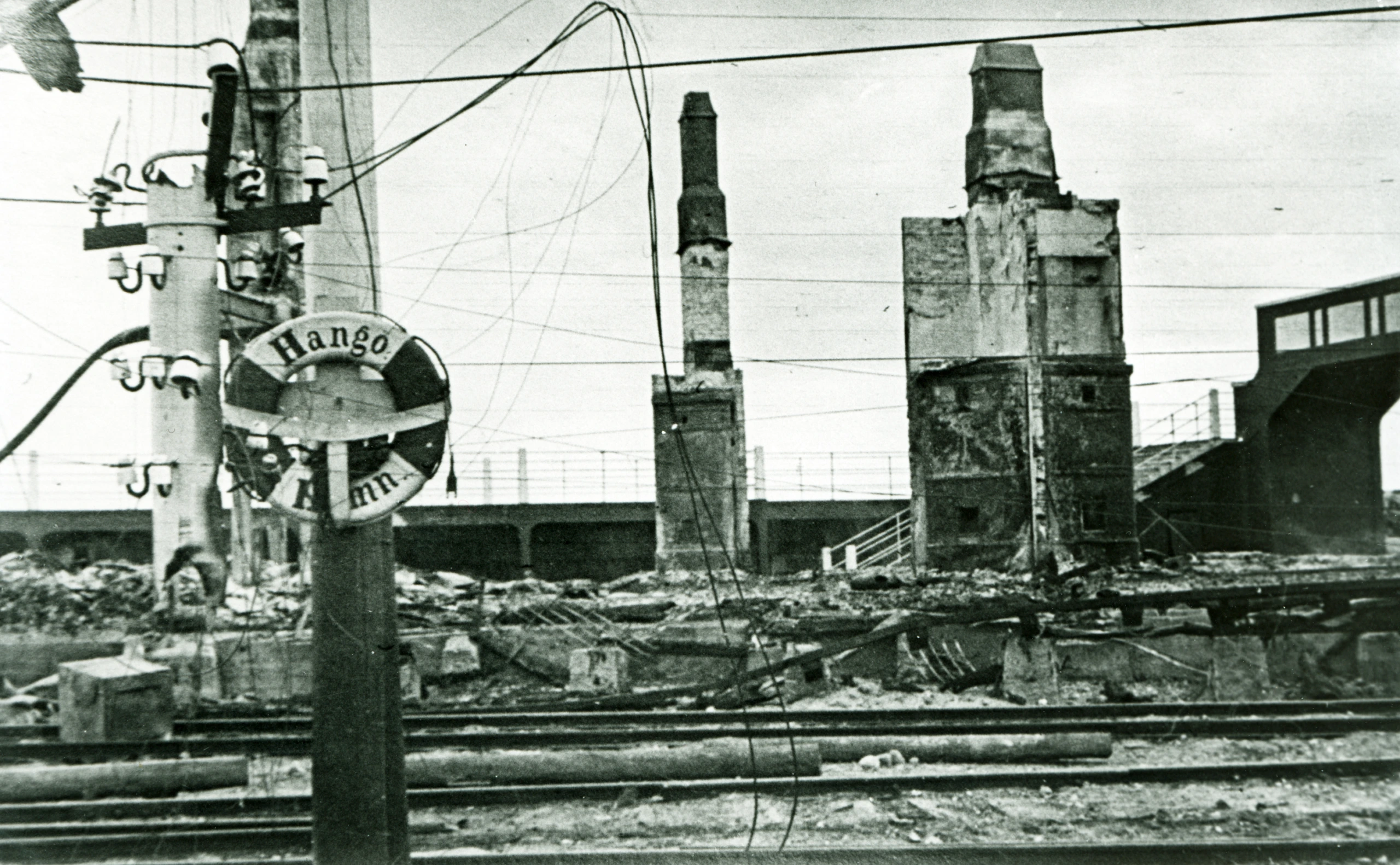
Tuhoutunut rakennus Hangon satamassa. En förstörd byggnad i Hangö hamn. A destroyed building inthe port of Hanko.

The First World War begins, and the Russian spa guests quickly leave. Hanko is a closed military area in 1916–1917.
The 3rd of April 1918

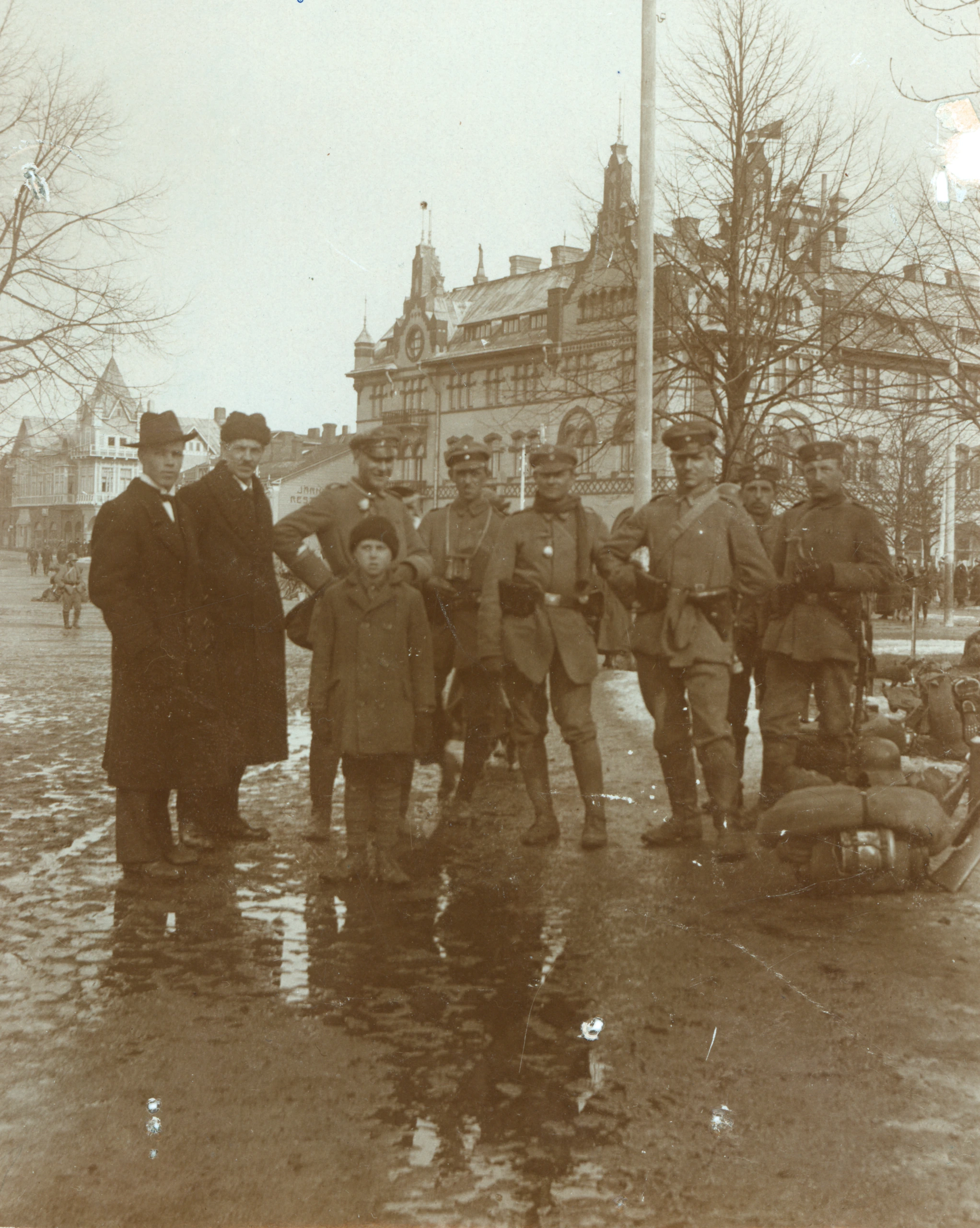
German troops arrive with ships in Hanko and the Red Guards flee the city. The Finnish civil war began on January 27th.
1919-1935
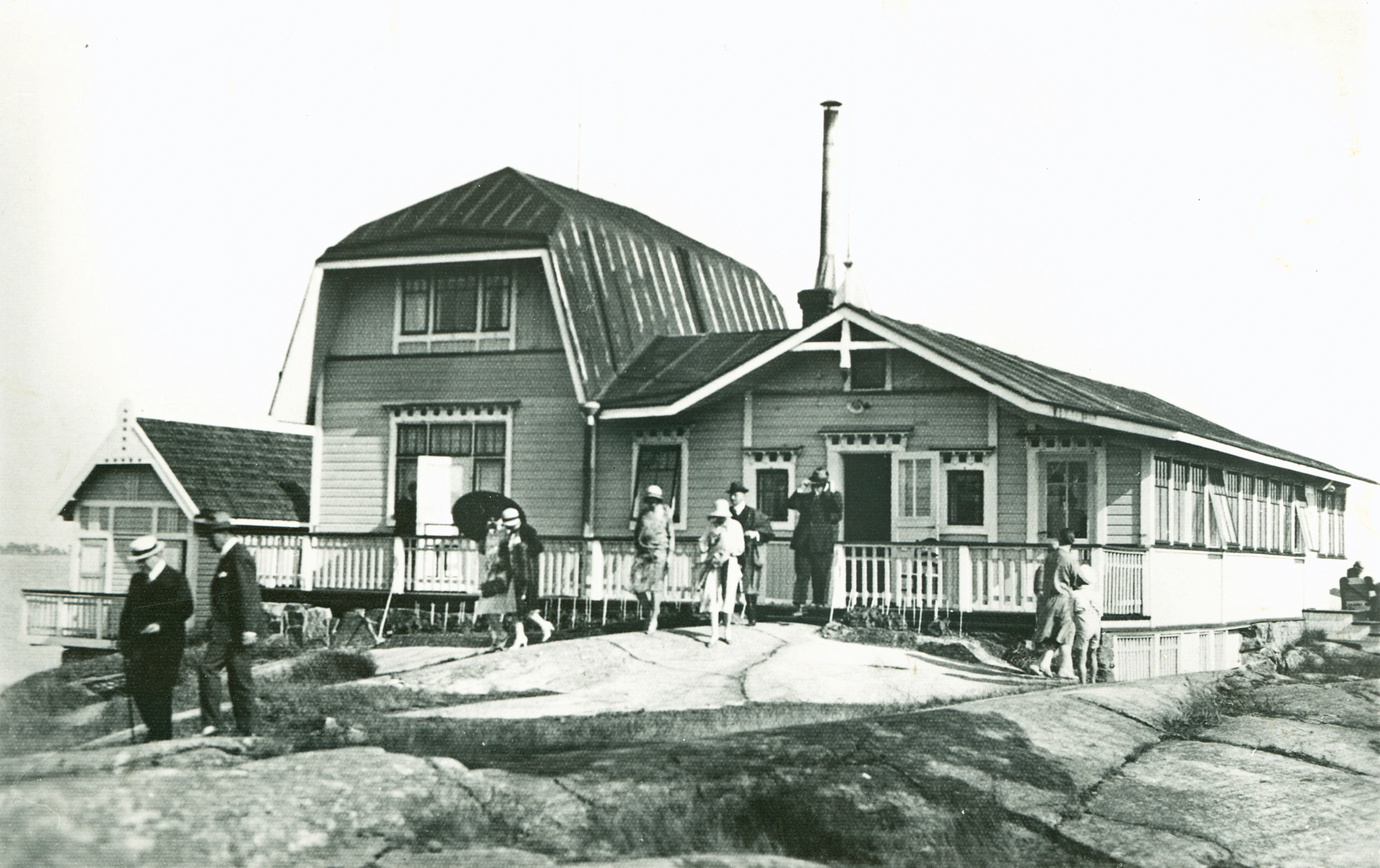
Neljän tuulen tupa 1920-luvulla. Vieraita lähdössä pois. De fyra vindarnas hus på 1920-talet. Gäster på vä bort. The House of the Four Winds in the 1920s. Café guests leaving.

General Mannerheim is a resident of Hanko. In the years 1927–1933, he owns the café the House of the Four Winds.
The 16th of May 1921
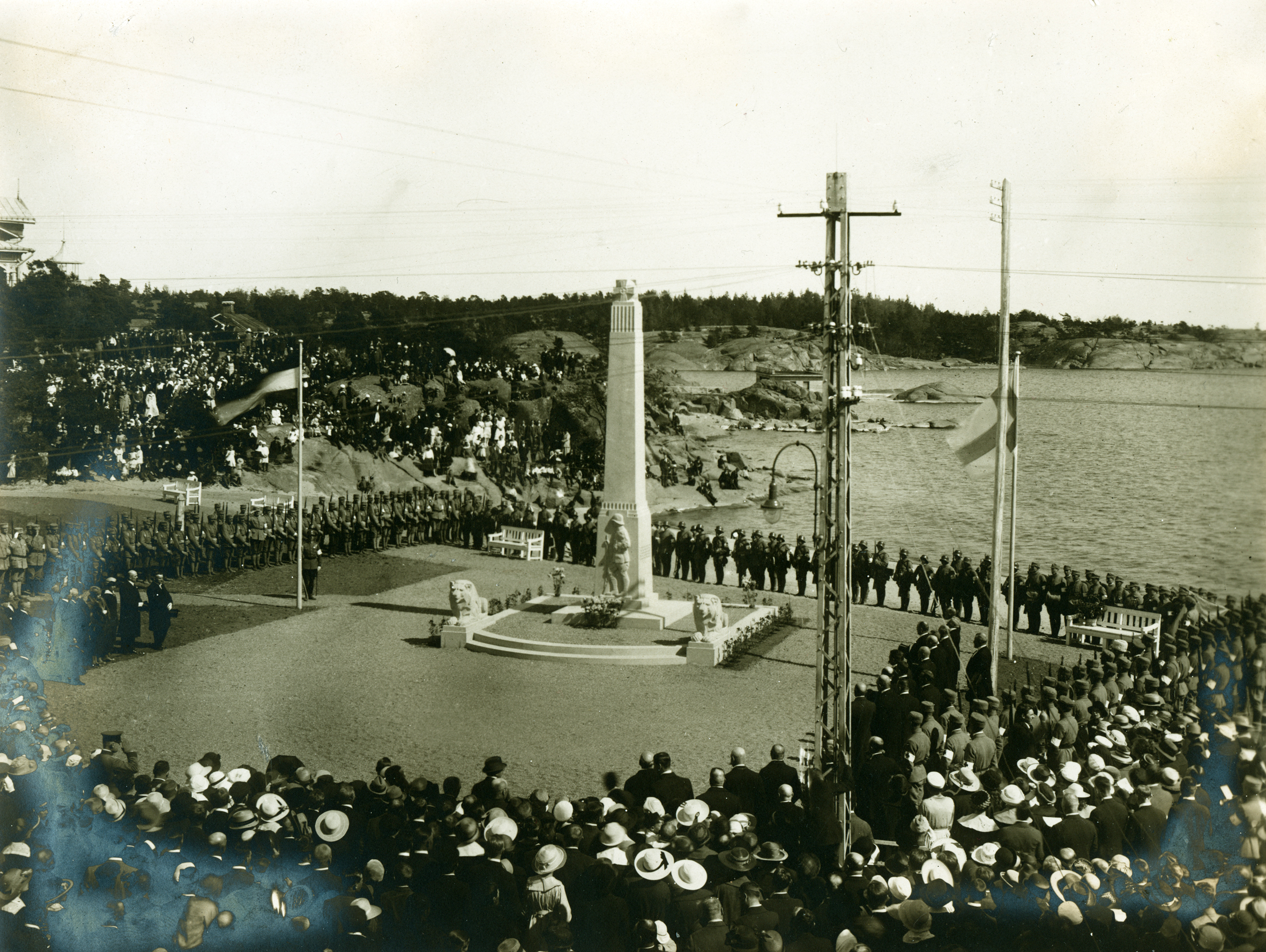
Vapauspatsaan vihkimistilaisuus. Suuri väkijoukko sekä patsaan luona että kallioilla. Frihetsstatyn invigs. Den stor samling människor både kring statyn och på klpiporna. The Freedom monument is revealed. A crowd has gathered around the statue and on the cliffs.

The Monument of Liberty is erected in memory of the German landing.
The 1920s
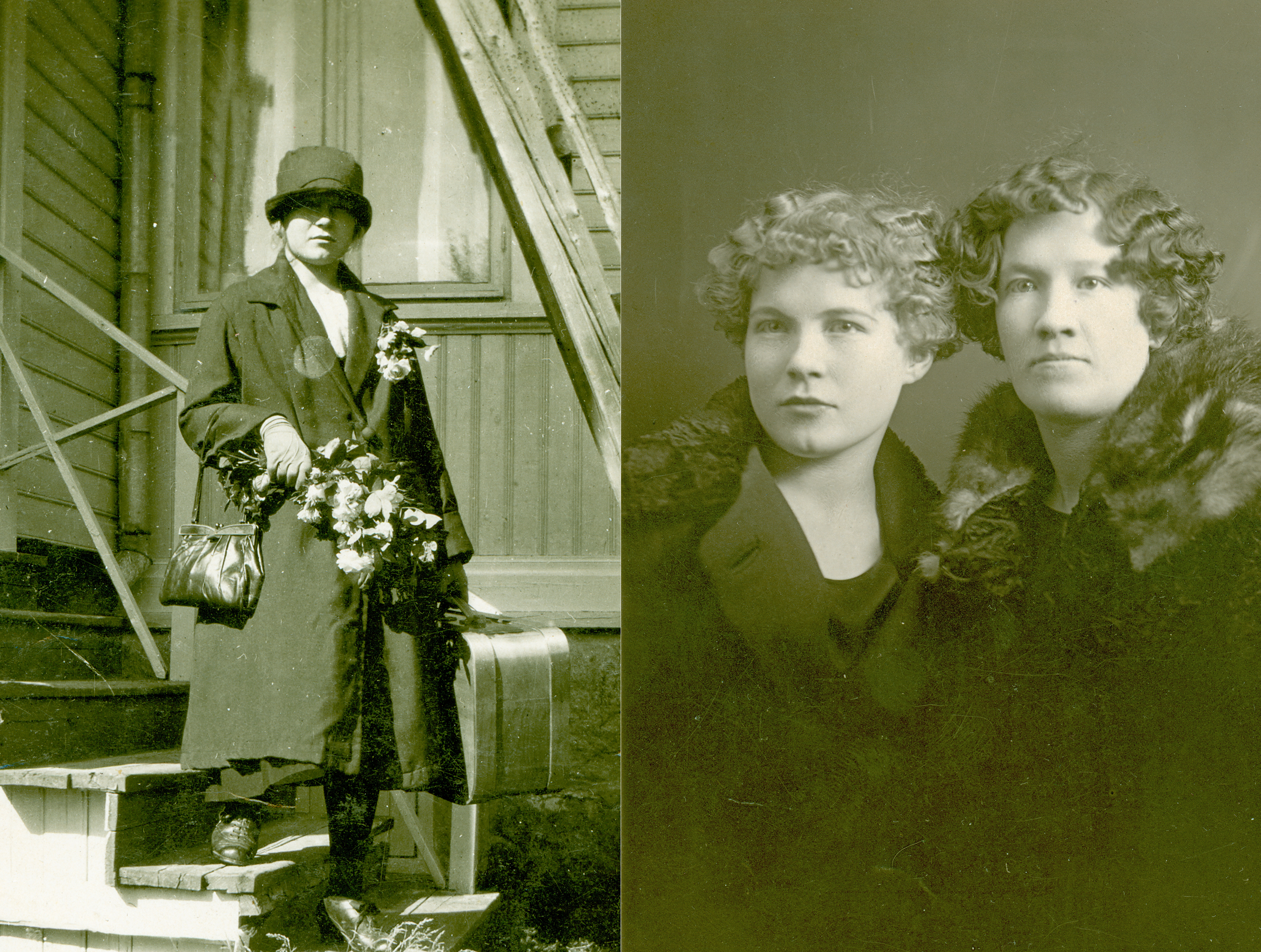
Suomalaisia siirtolaisia. Yhdessä kuva nainen Suomessa ja toisessa kuvassa nainen on USA:ssa ystävättärensä kanssa. Två bilder på emigranter. På den ena bilden är kvinnan i Finland och på den andra i USA tillsammans med en väninna. Two picutres of emigrants. In the first picture the emigrant is pictured in Finland and other in USA together with a friend.

An emigrant leaving Hanko has taken a photo on the steps of her home, and later she will send a photo of herself from the United States to show how well she is doing there.
1926
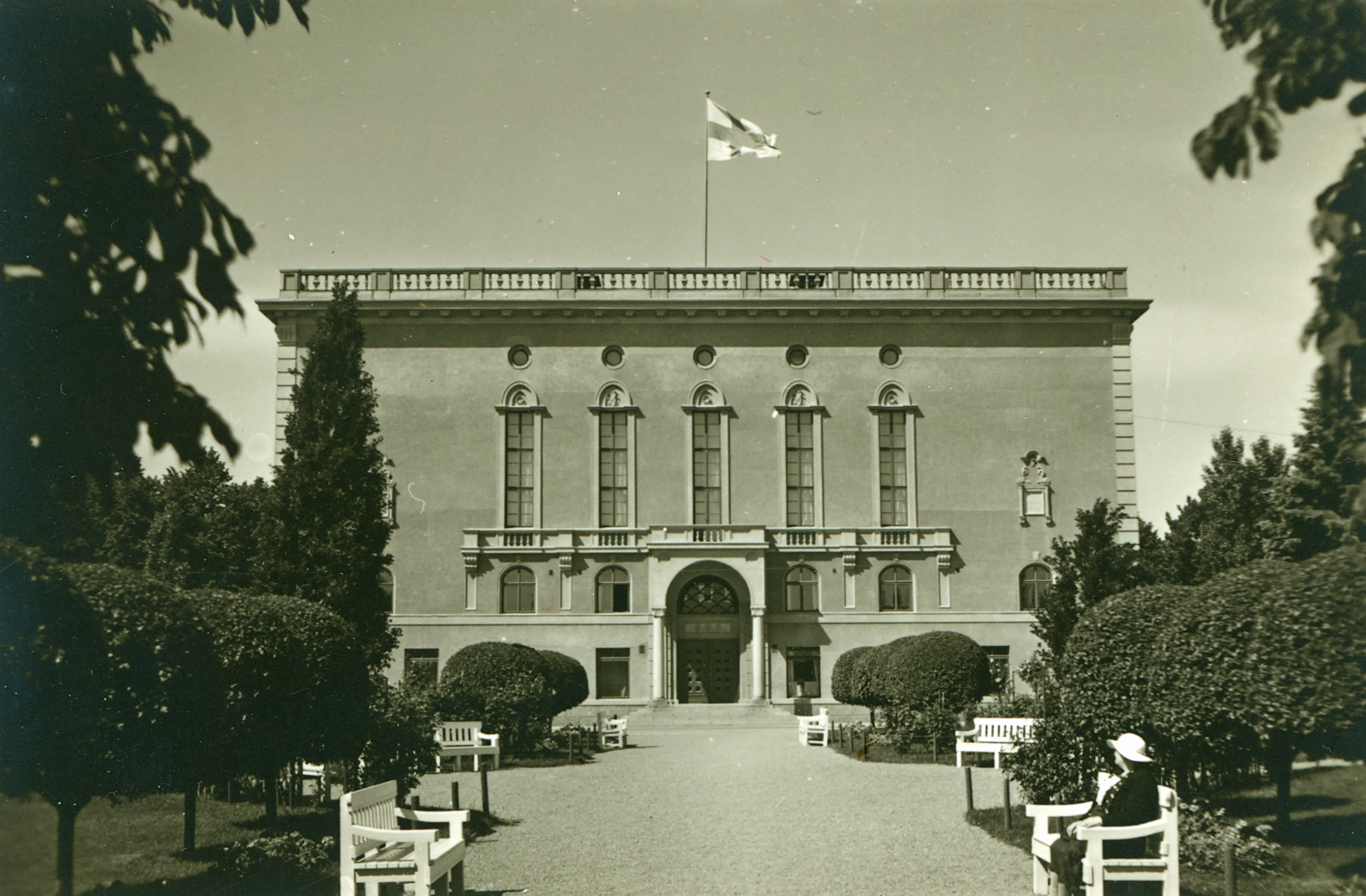
Hangon vanha kaupungintalo ja sen edustalla oleva puisto. Nainen istuu penkillä. Hangös gamla stadshus oh arken framförden. En kvinna sitter på en bänk. The old town hall of Hanko and the park in front of it. A woman sits on a bench.

The city hall of Hanko is completed.
1927
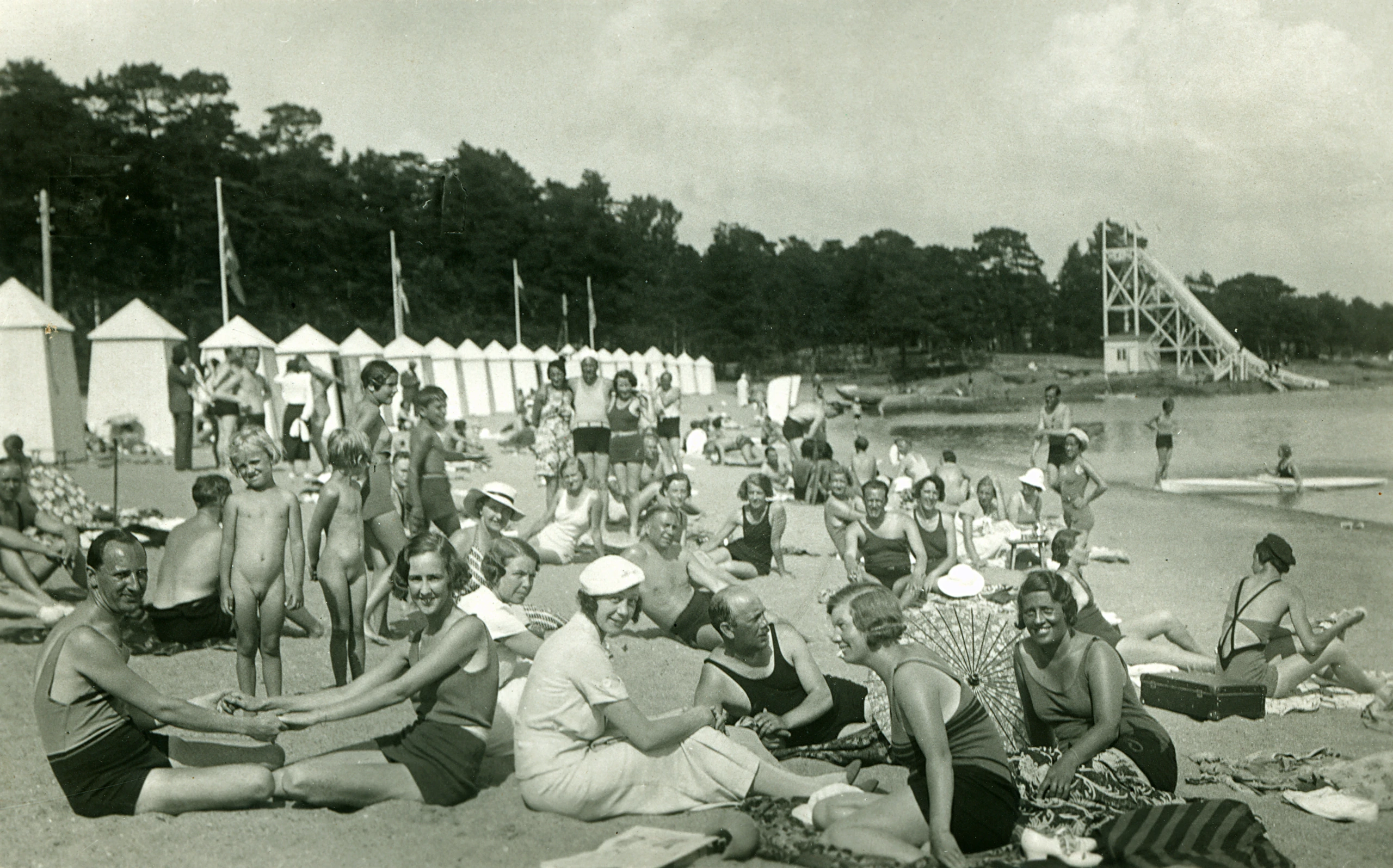
Plagenin ranta 1920-luvulla. Ranta on täynnä ihmisiä ja uimakoppeja. Taustalla korkea liukumäki. Plagenstranden på 1920-talet. Strand är fylld med människor och badhyttar. I bakgrunden en hög rutschkana. The Plagen beach in the 1920s. The beach is filled with people and beach cabins. A tall slide in the background.

A slide is opened on the Plagen beach, from which both children and adults descend on coconut rugs. It’s fashionable to have a tan.
The 30rd of November 1939
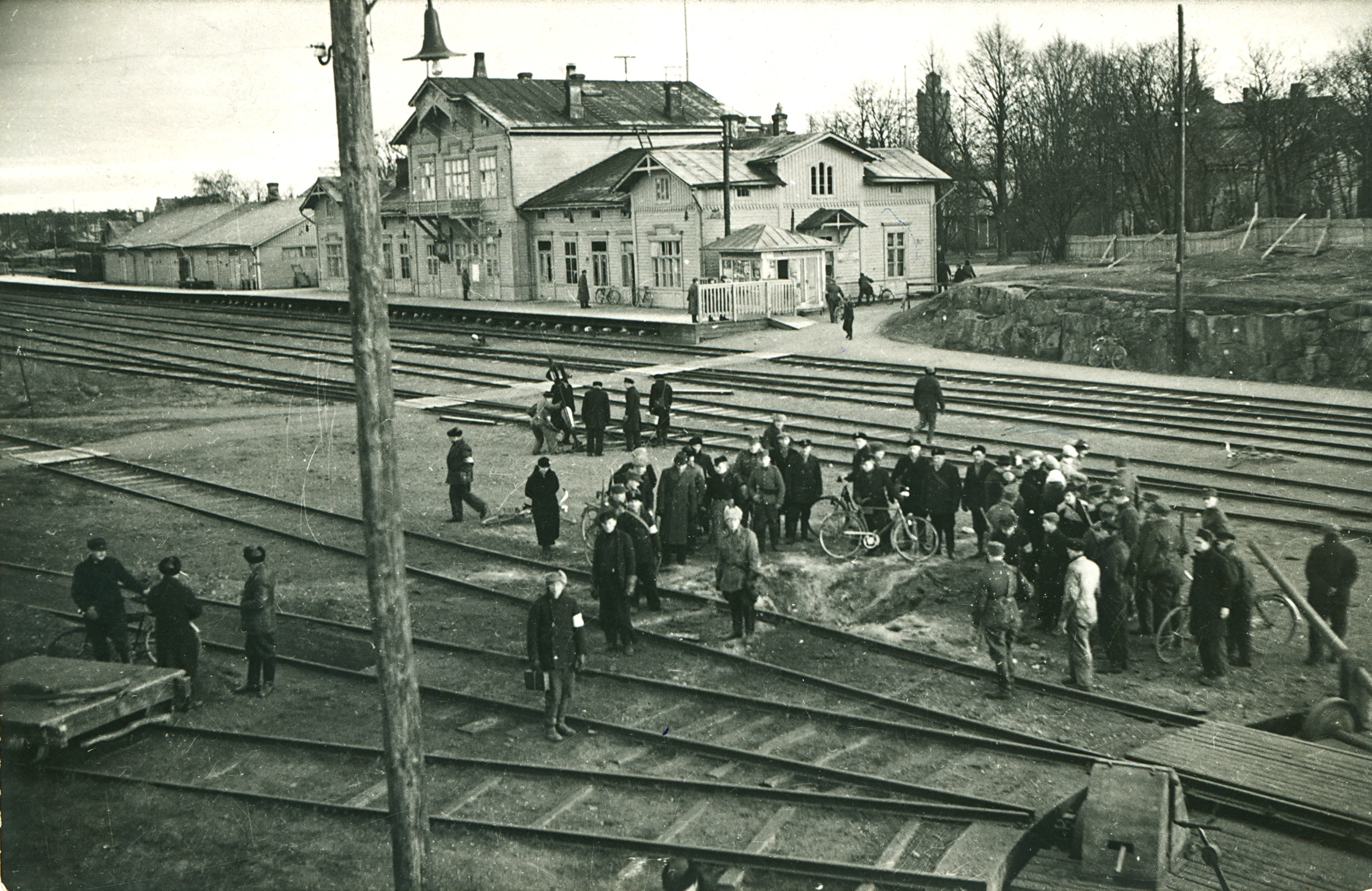
Hankolaiset ovat kokoontuneet katsomaan pommin tekemää kuoppaa ratapihalla vuonna 1939. Taustalla näkyy vanha rautatieasema, vanha vesitorni ja muita rakennuksia. Hangöborna står samlade kring en grop som en bomb har lämnat på bangården 1939. I bakgrunden syns den gamla järnvägsstationen, det gamla vattentornet och andra byggnader. Residents of Hanko have gathered around a pit left by a bomb in the railway yard in 939. In the background you can see the old railway statoin, the old water tower and other buildlings.

The Winter War begins and Hanko is bombed on the first day of war.
The 13th of March 1940
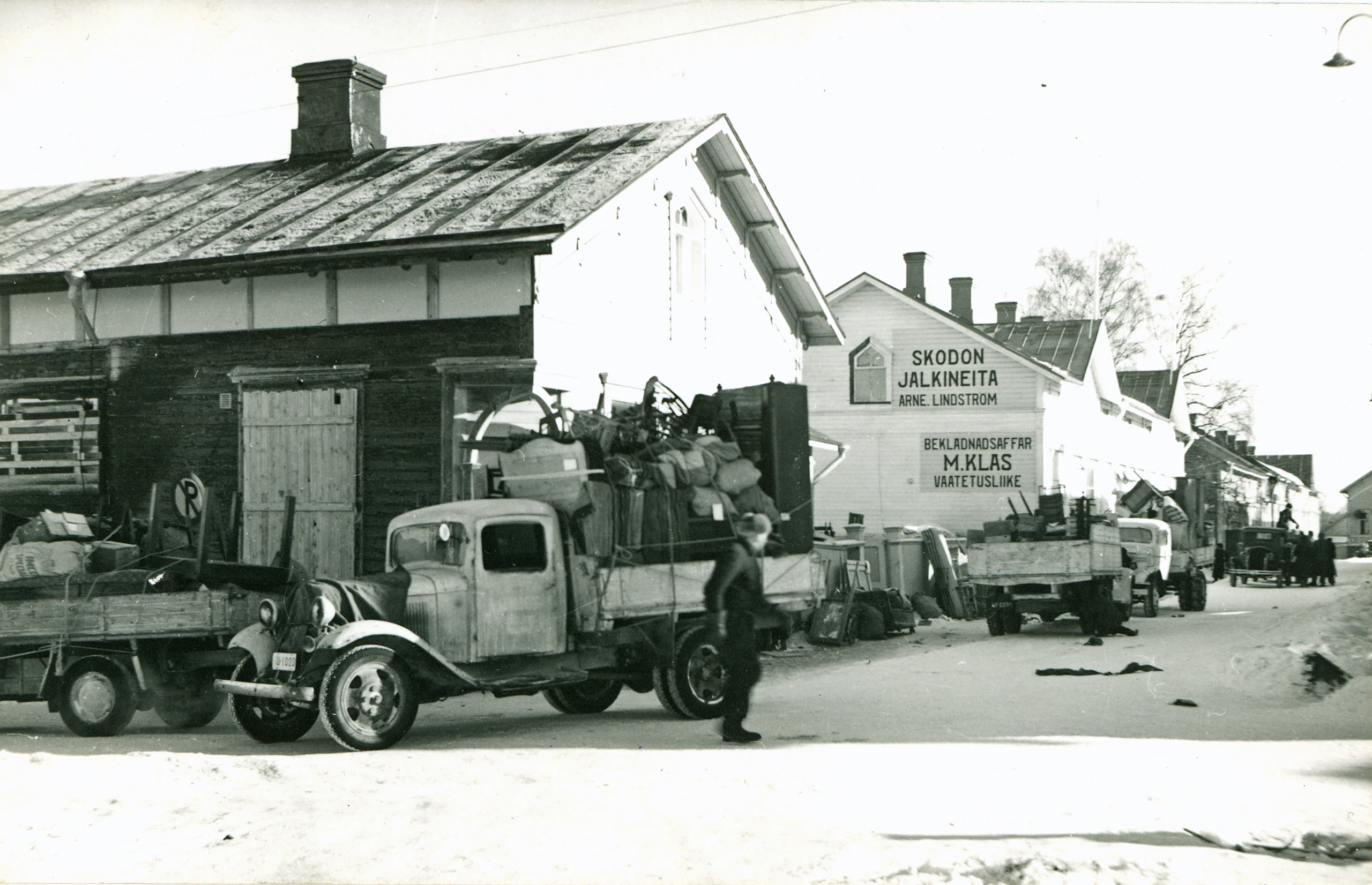
Ratakatu maaliskuussa 1940. Käynnissä on evakuointi ja kadulla seisoo kuorma-autoja, jotk aovat täynnä tavaraa. Tausta kauppoja. Bangatan i mars 1940. Hangö evakueras och på gatan står flera lastbilar fullpackade med möbler och saker. I bakgrunden butiksbyggnader. Ratakatu in March 1940. Hanko is being evacuated and on the road are several trucks packed with furniture. In the background business buildings.

The Hanko Peninsula is leased to the Soviet Union as a naval base for 30 years. The residents of Hanko are given 10 days to evacuate the peninsula.
The 4th of December 1941
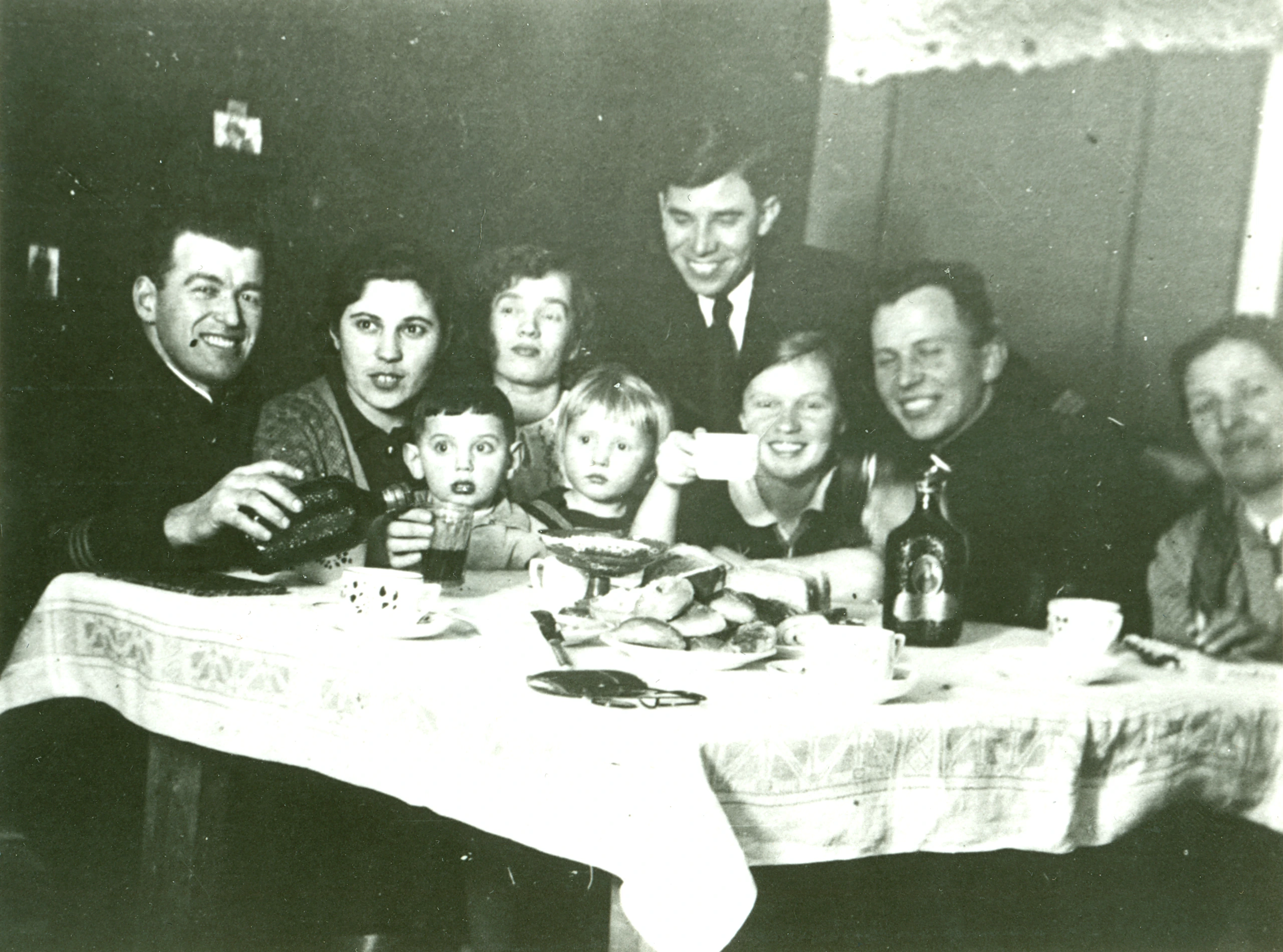
Venäläinen perhe pöydän ympärillä Hangossa 1940-luvulla. Pöydällä on leipiä, pulloja ja kahvikuppeja. Seurueessa on sekä aikuisia että lapsia. En rysk familj kring ett bord i Hangö på 1940-talet. På bordet står bröd, flaskor och kaffekoppar. I sällskapet ingår både vuxna och barn. A russian family sits by a table in Hanko in the 1940s. On the table are bread, bottles and coffe cups. There are both children and adults on the picture.

The Russians have quietly abandoned Hanko and the city is taken back by the Finns.
1942
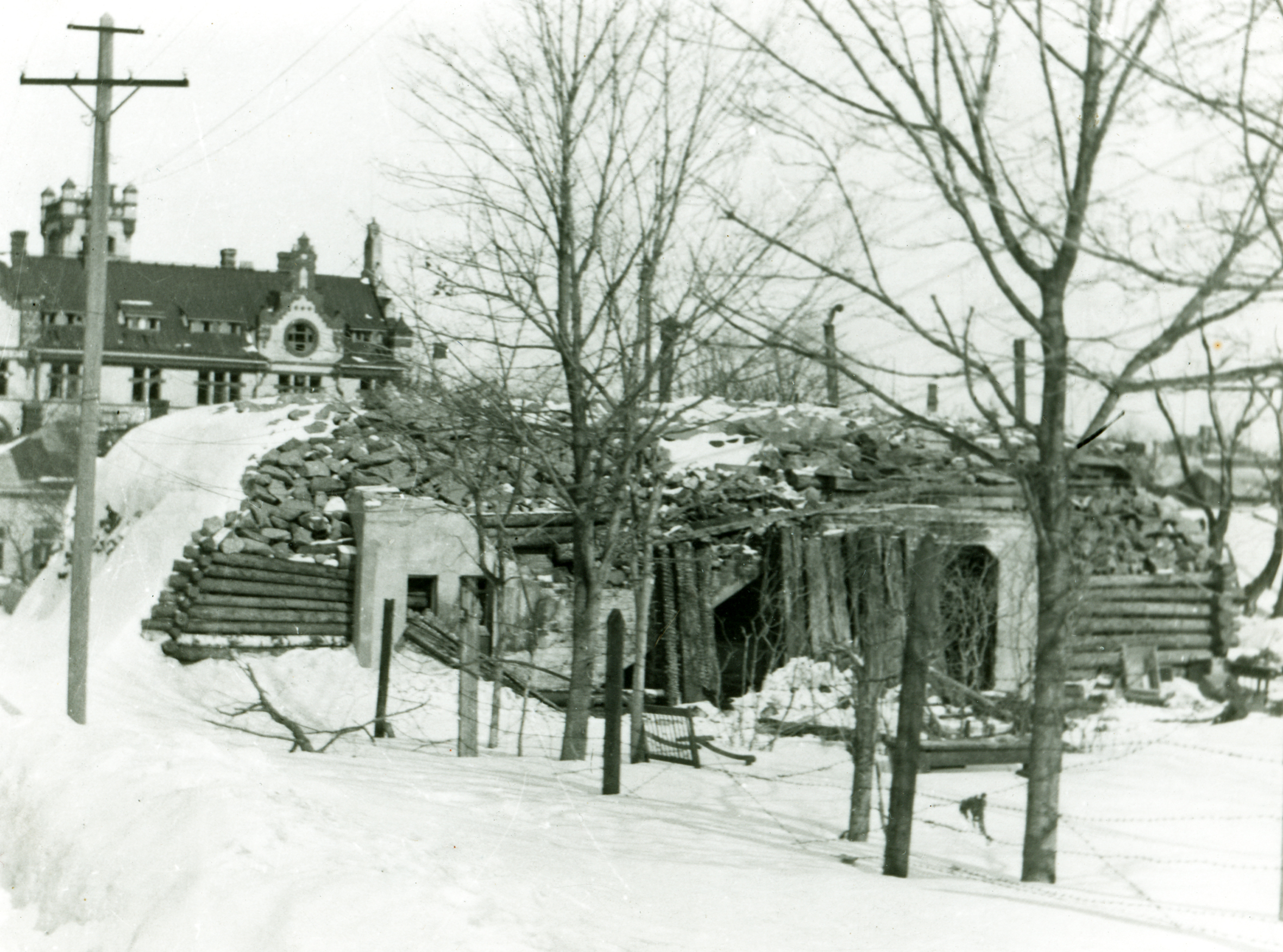
Punkkeri, jota ympäröi piikkilanka. Taustalla Regattahotelli. On lumista. En bunker som omringas av taggtråd. I bakgrunden hotell Regatta. Det är snö på marken. A bunker surrounded with barb wire. In the background the Regatta hotel. There's snow.

The rebuilding of Hanko begins. The city hall and water tower have been destroyed and 80 % of the buildings have been damaged.
1954
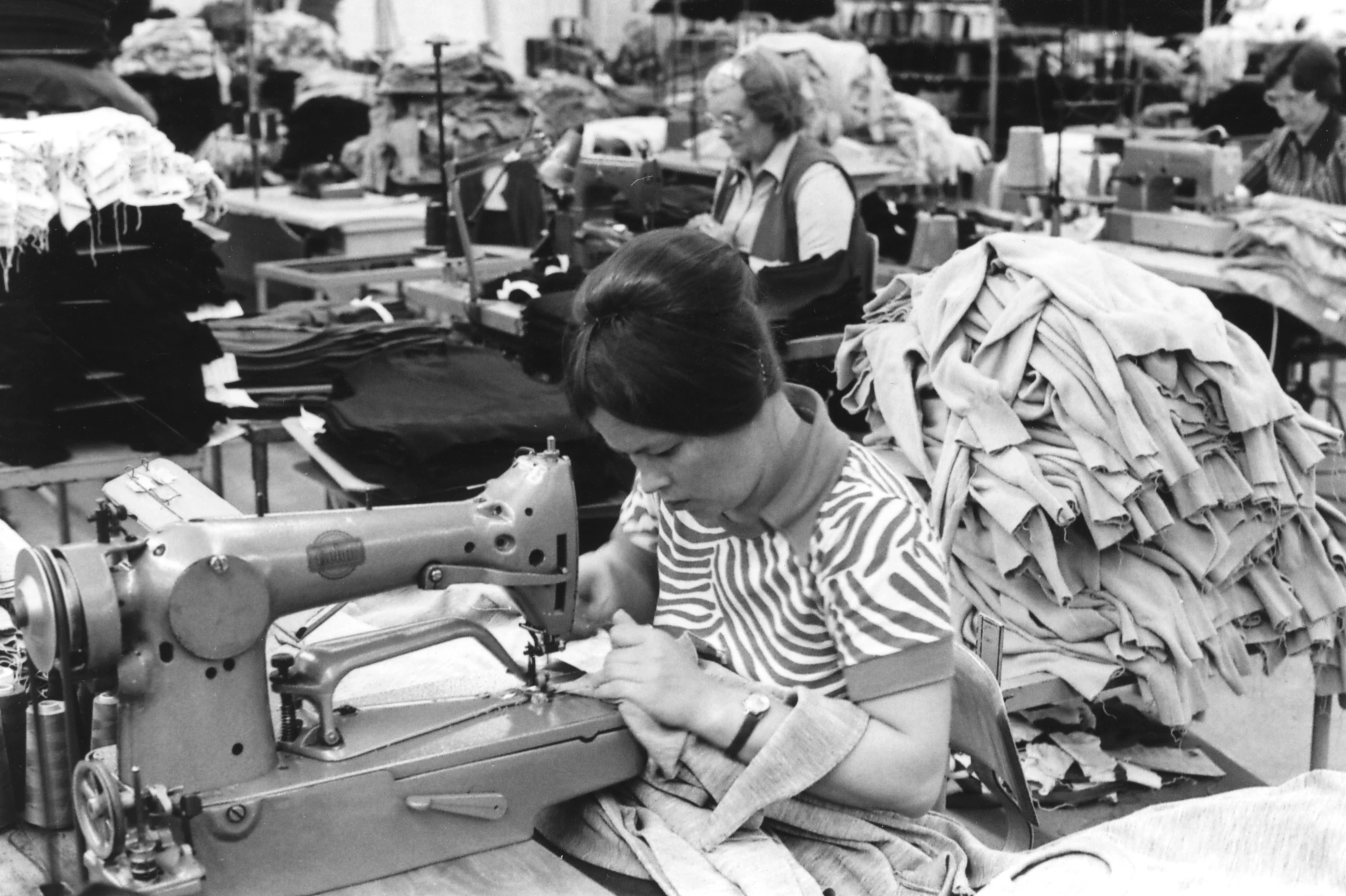
Hyvonin tekstiilitehtaassa. Naiset ompelevat vaatteita. I Hyvons textilfabrik. Kvinnor syr kläder på maskin. The textile factory Hyvon. Women sewing clothes.

Hyvon Kudeneule Oy is founded in Hanko. The factory manufactures among other things men’s underwear until 1977.
1961
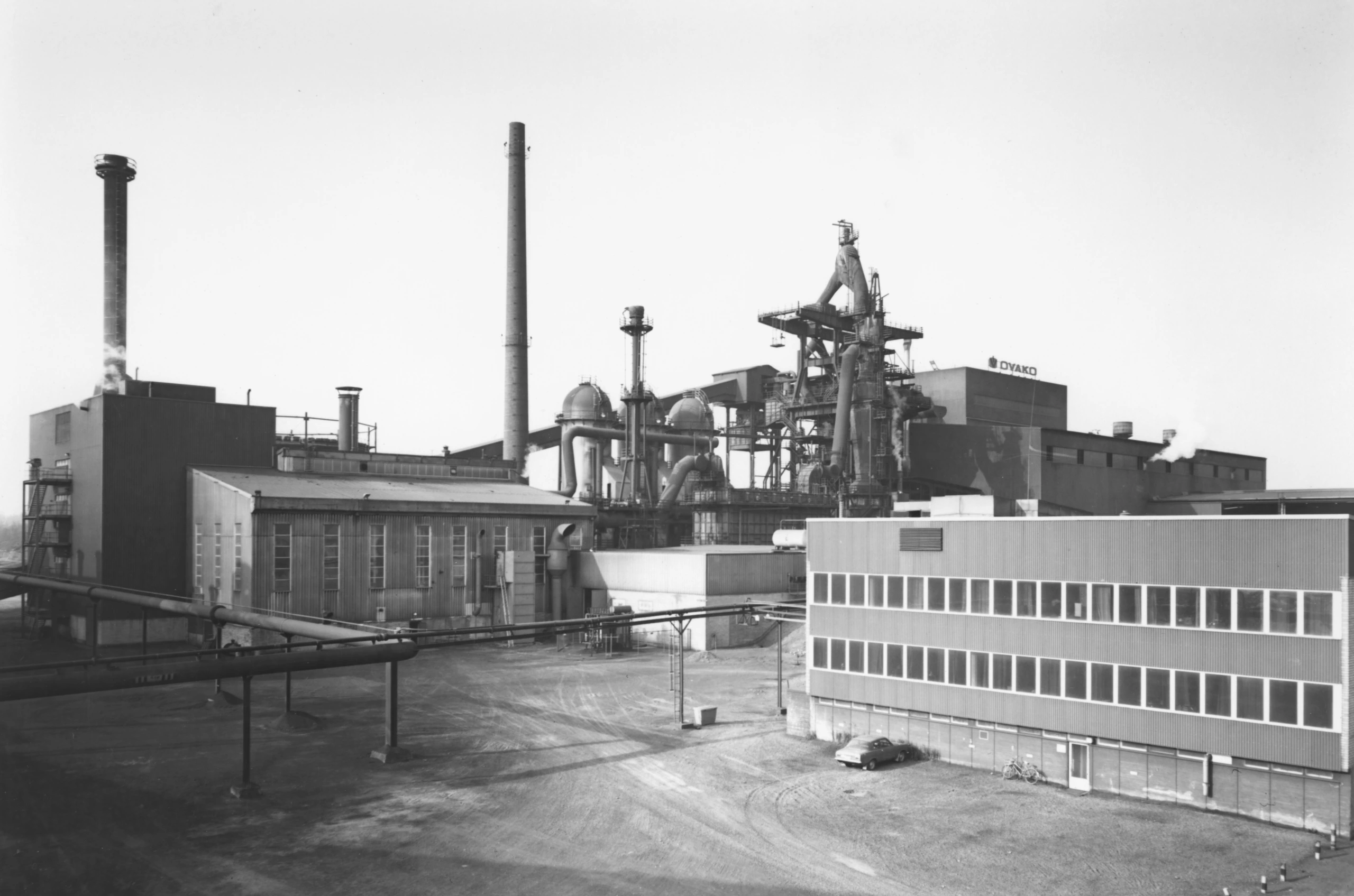
Rauta- ja terästehadas Koverhar. Kuvassa on monta erilaista rakennusta. Järn- och stålverket Koverhar. På bilden syns flera byggnader. The iron and steel works of Koverhar. The picture show several different buildings.

Oy Koverhar Ab has started its production of iron. Ten years later a steel factory is launched. Production ends in 2012.
1969
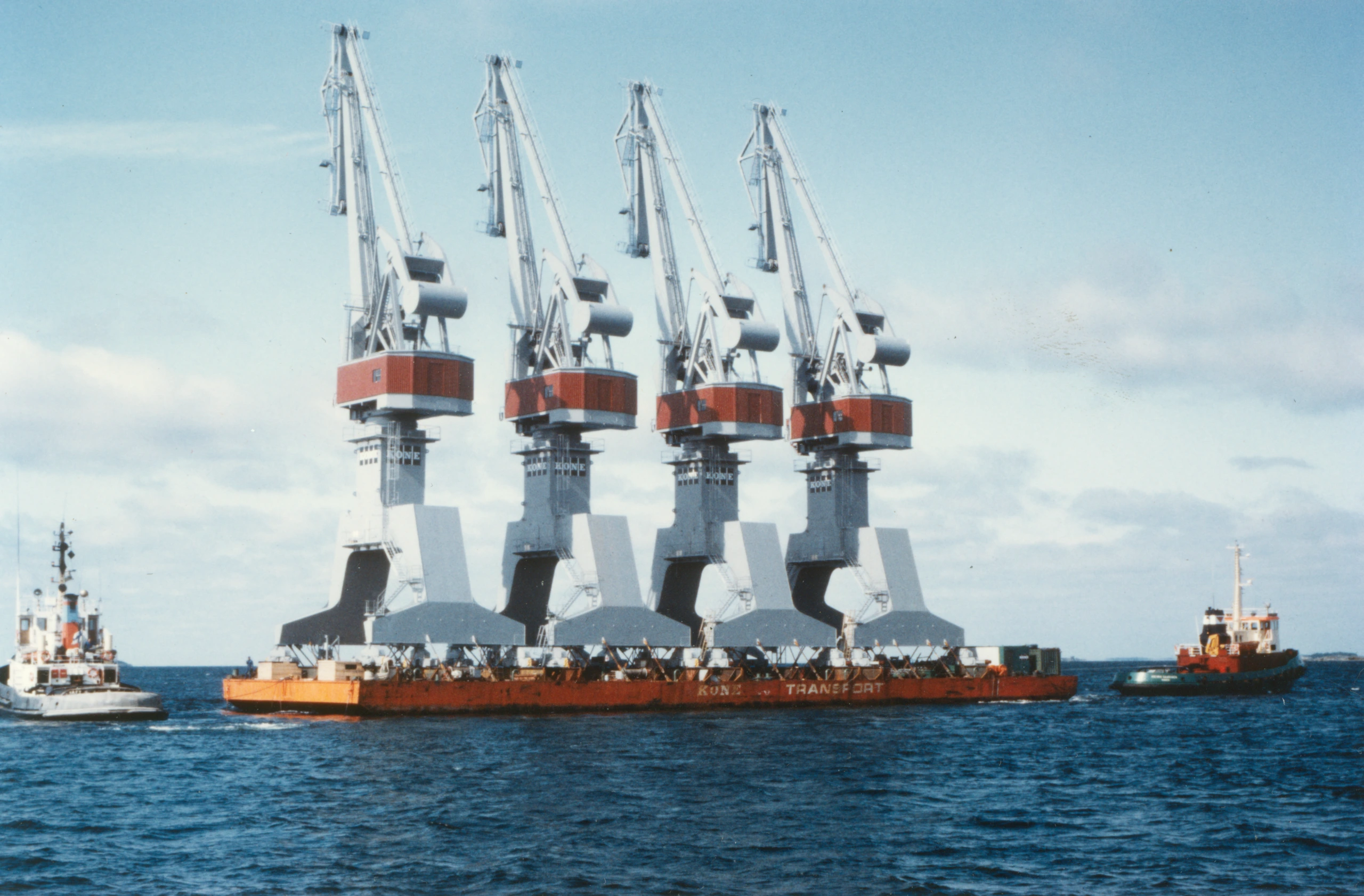
Kaksi hinausvenettä vetää Koneen proomua, jossa seisoo neljä identtistä satamanosturia. Två bogserbåtar drar Kones pråm på vilken det står fyra identiska hamnlyftkranar. Two tugboat transporting a barge with four identical harbor cranes.

Kone Oy beings making cranes in Hanko. Cranes are exported around the world. Production ends in 1987.
1974
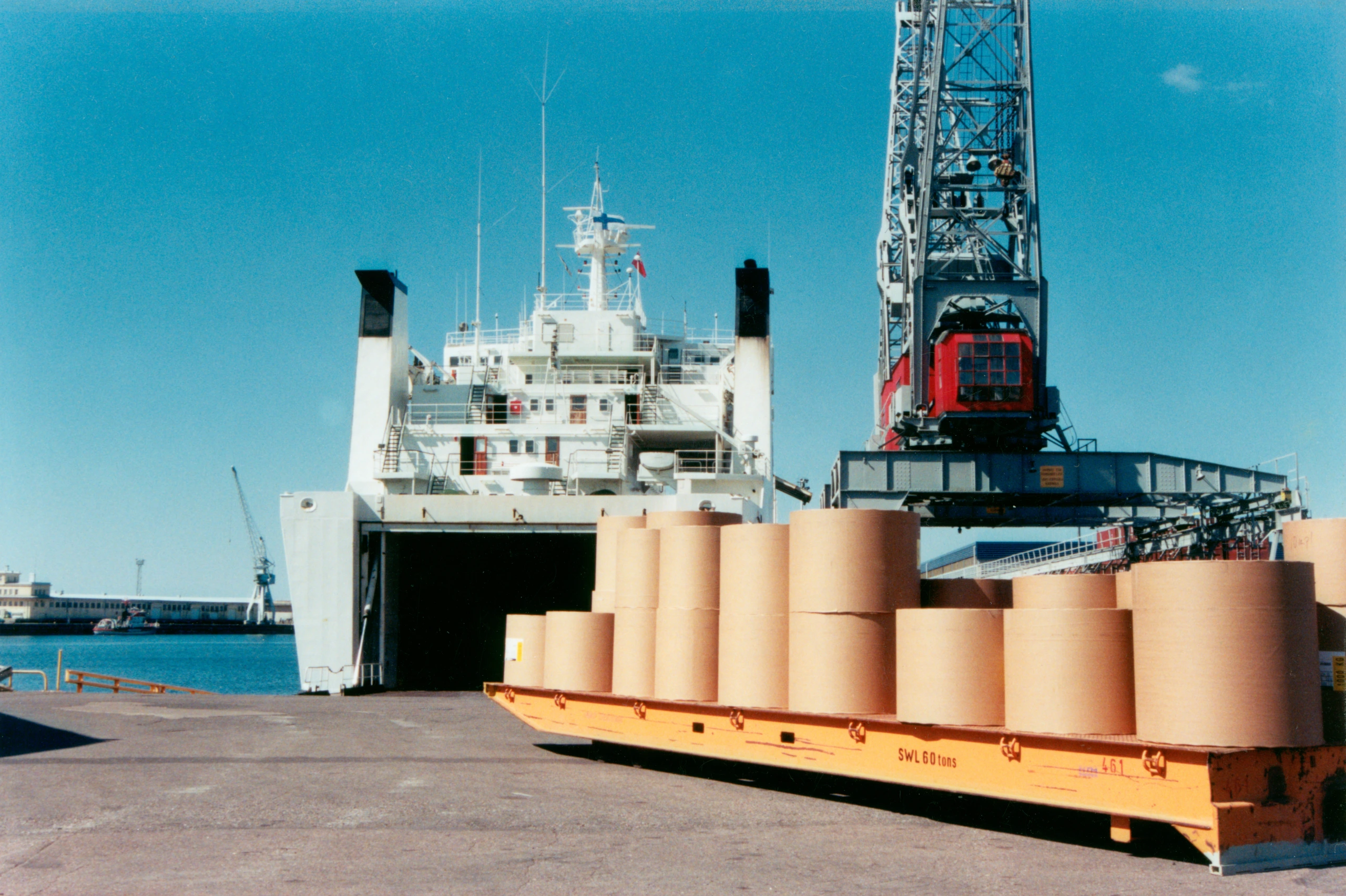
Hangon satama, jossa lasti paperirullia odottavat siirtoa sisään laivaan. Hangö hamn där en last med stora pappersrullar väntar på att bi förflyttade in i ett fartyg. The port of Hanko, where big paper rolls are about to be loaded into a boat.

The city of Hanko amortizes the port of Hanko for 1 million marks from the state.
1977
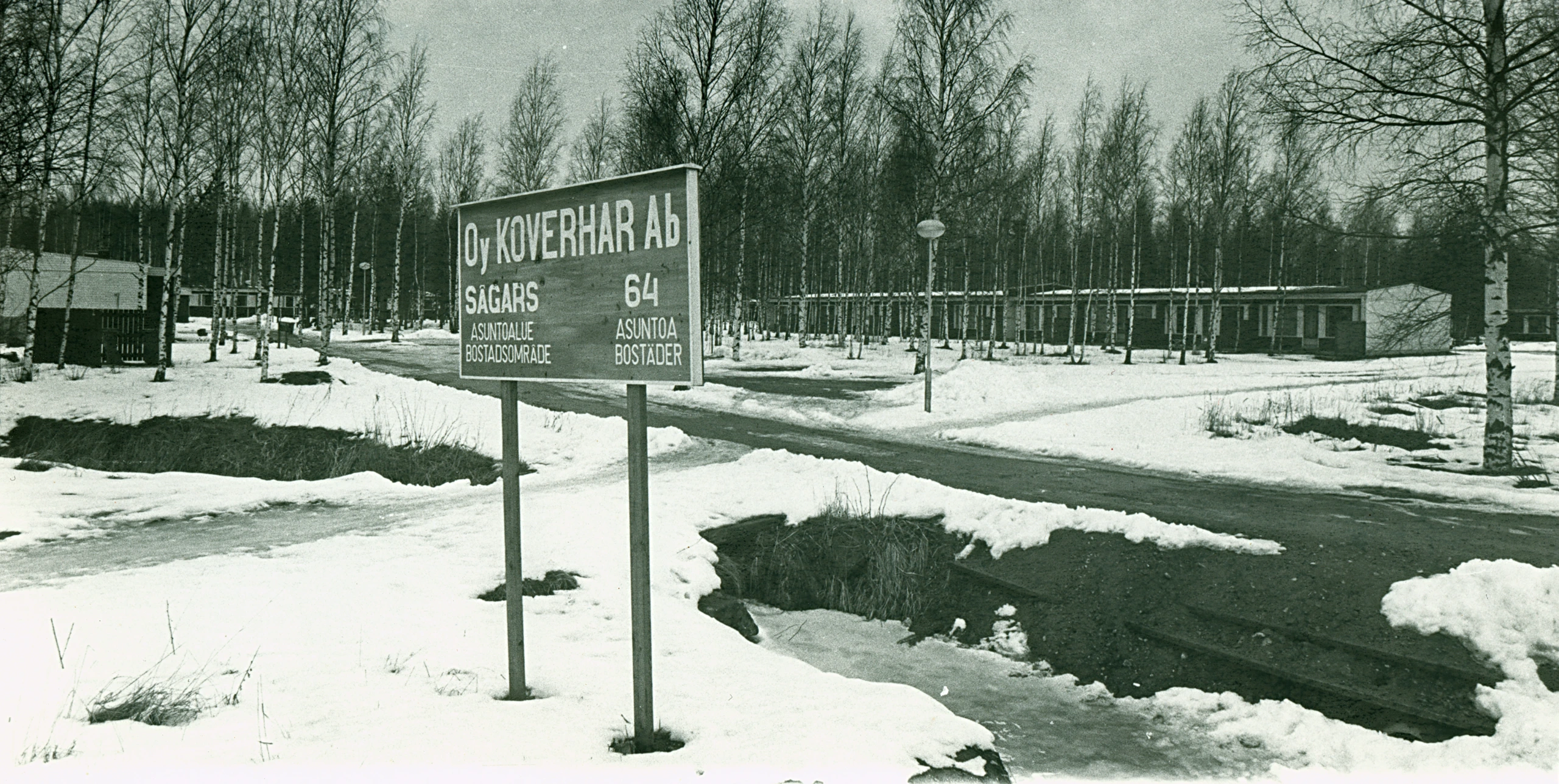
Rivitaloalue Lappohjassa. Edustalla kyltti "Oy Koverhar Ab Sågars". Ett radhusområde i Lappvik. Framtill en skylt "Oy Koverhar Ab Sågars". Rowhouses in Lappohja. In front a sign "Oy Koverhar Ab Sågars".

Tvärminne from the rural municipality of Ekenäs, Lappohja from the municipality of Tenala and both Täktom and Santala from the municipality of Bromarv are incorporated into the municipality of Hanko.
1983
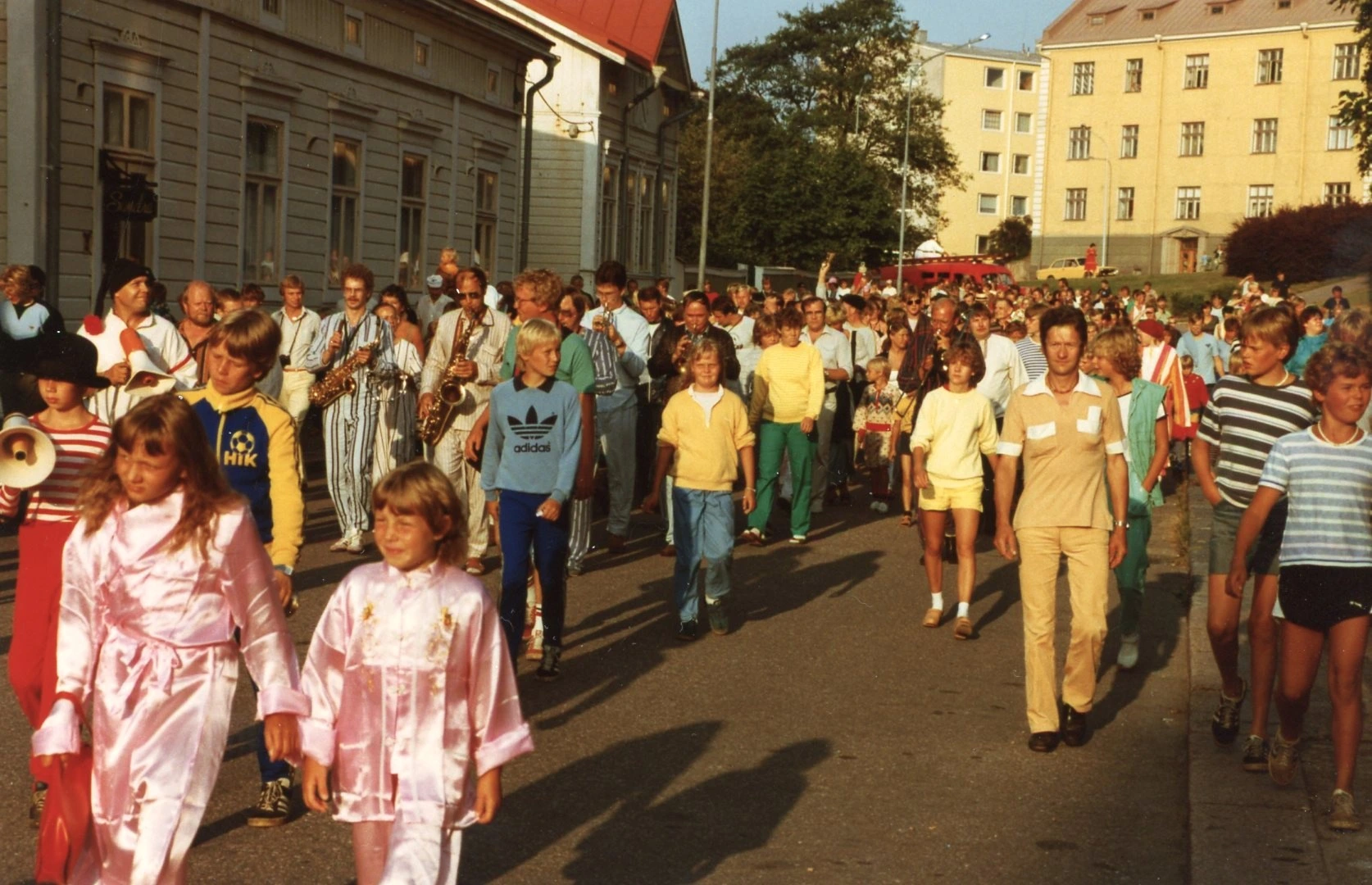
Ihmisiä kulkee kaupungin kadulla kesäaikaan

Finnish becomes the majority language in Hanko.
The picture is from the National Sleepy Head Day on July 27, 1983.
 

2002
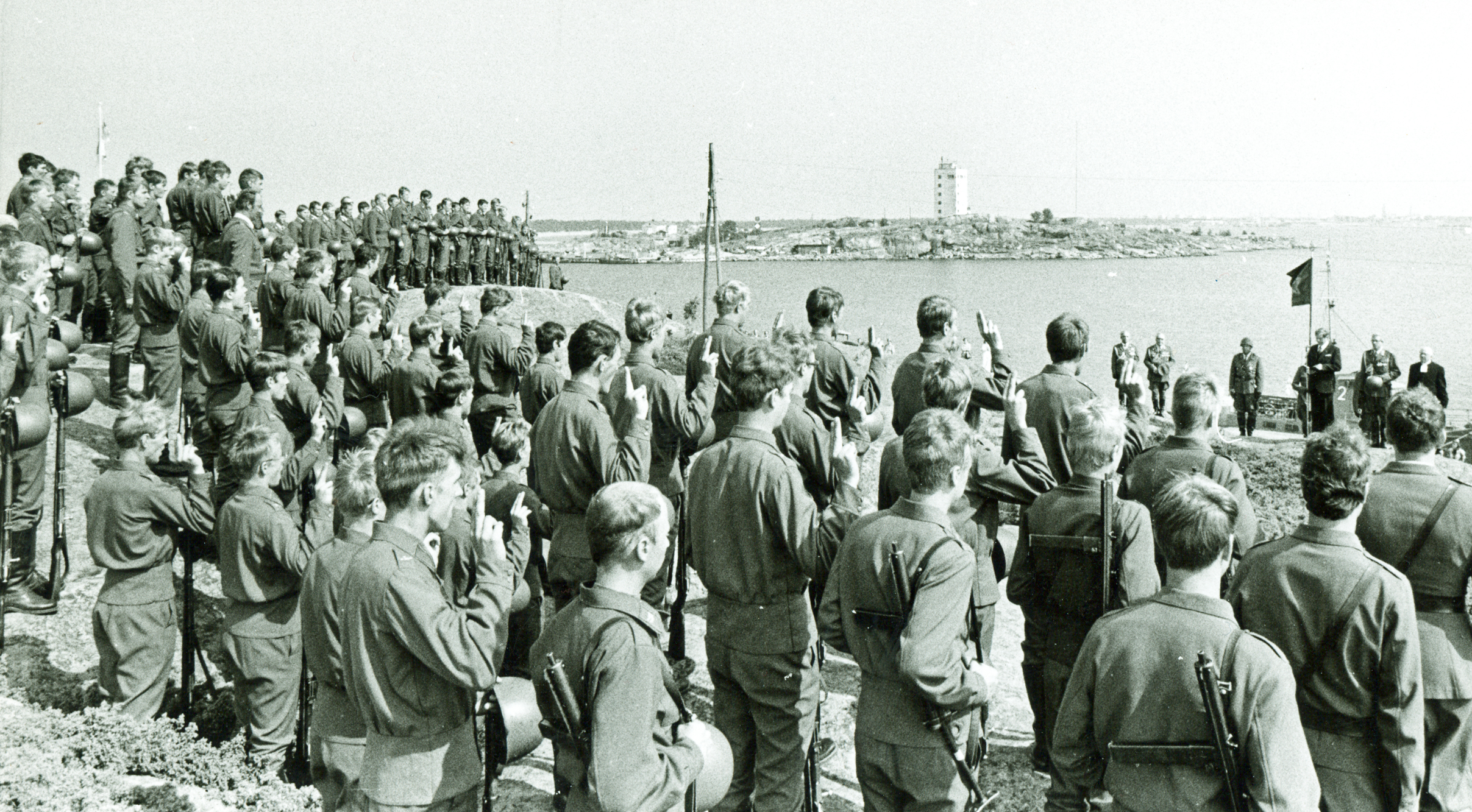
Sotilaat vannovat valaa Hangon eteläkärjellä. Soldater svär ed på Hangös sydspets. Soldiers swearing an oath on the southern tip of Hanko.

The Coastal Artillery Battallion of Hanko, which has operated in the city since 1921, is discontinued.
2008
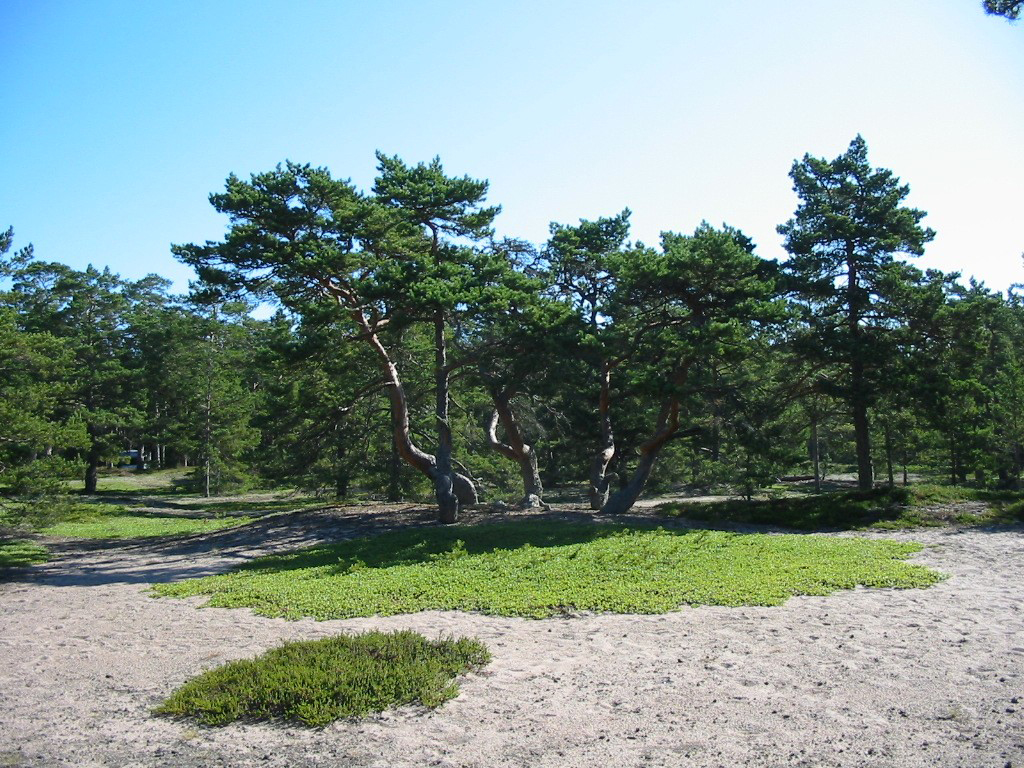
Hiekkaa ja mäntyjä Tvärminnessä. Sand och tallar i Tvärminne. Sand and pine trees in Tvärminne.

The National City Park of Hanko is founded.
The 15th of May 2025
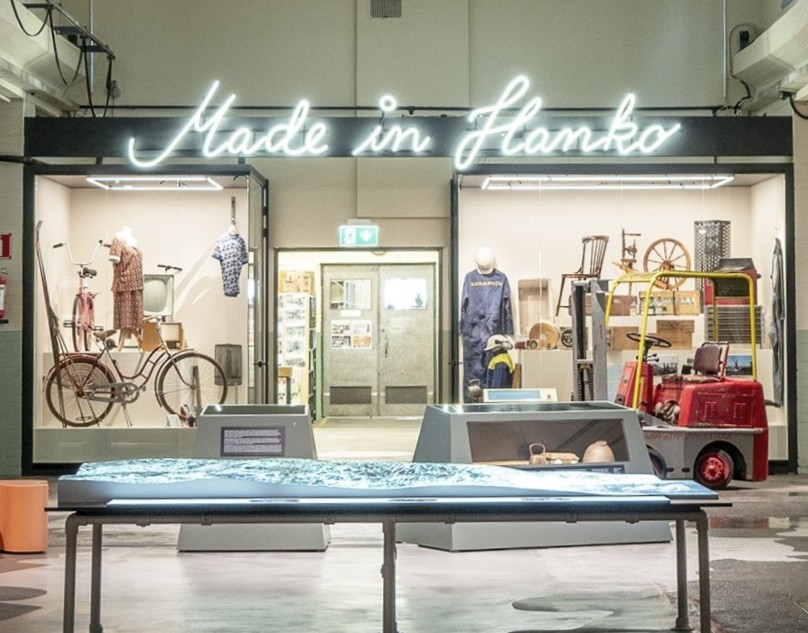
Näkymä Hangon museon perusnäyttelyyn

The Museum of Hanko opened its main exhibition Where Land & Sea Meet in the old factory facilities of the Manner’s mechanical workshop at Pitkäkatu 17.

0